Notes on Teaching Empathy to Kids
What teaching empathy mapping to kids revealed about problem-first building, AI, and why noticing real human friction matters.
There is one question I’ve started asking kids when they share their idea:
“Whose life is harder because this problem exists?”
Most of us, kids and adults, start from the inside out. We begin with something we want to create, then look for a problem it could solve. The idea comes first, and the user comes later, as a kind of justification.
But that’s not how successful products are built.
When I was teaching at ISD, a design college in Pune, I noticed that most students arrived with strong opinions about aesthetics. They knew what they liked. What they hadn’t developed was the ability to set aside what they liked and ask what someone else needed. The work often reflected their taste, not their understanding of a person.
That observation is part of what led me toward bringing design education in K12. A design college student carries the baggage of “idea-first” conditioning on them. It’s hard to break that mindset. (I guess that’s why most graduate design programs are 4 years?)
A 10yo school kis is still early in that journey and fixable. That is my “why” for working at K12 level.
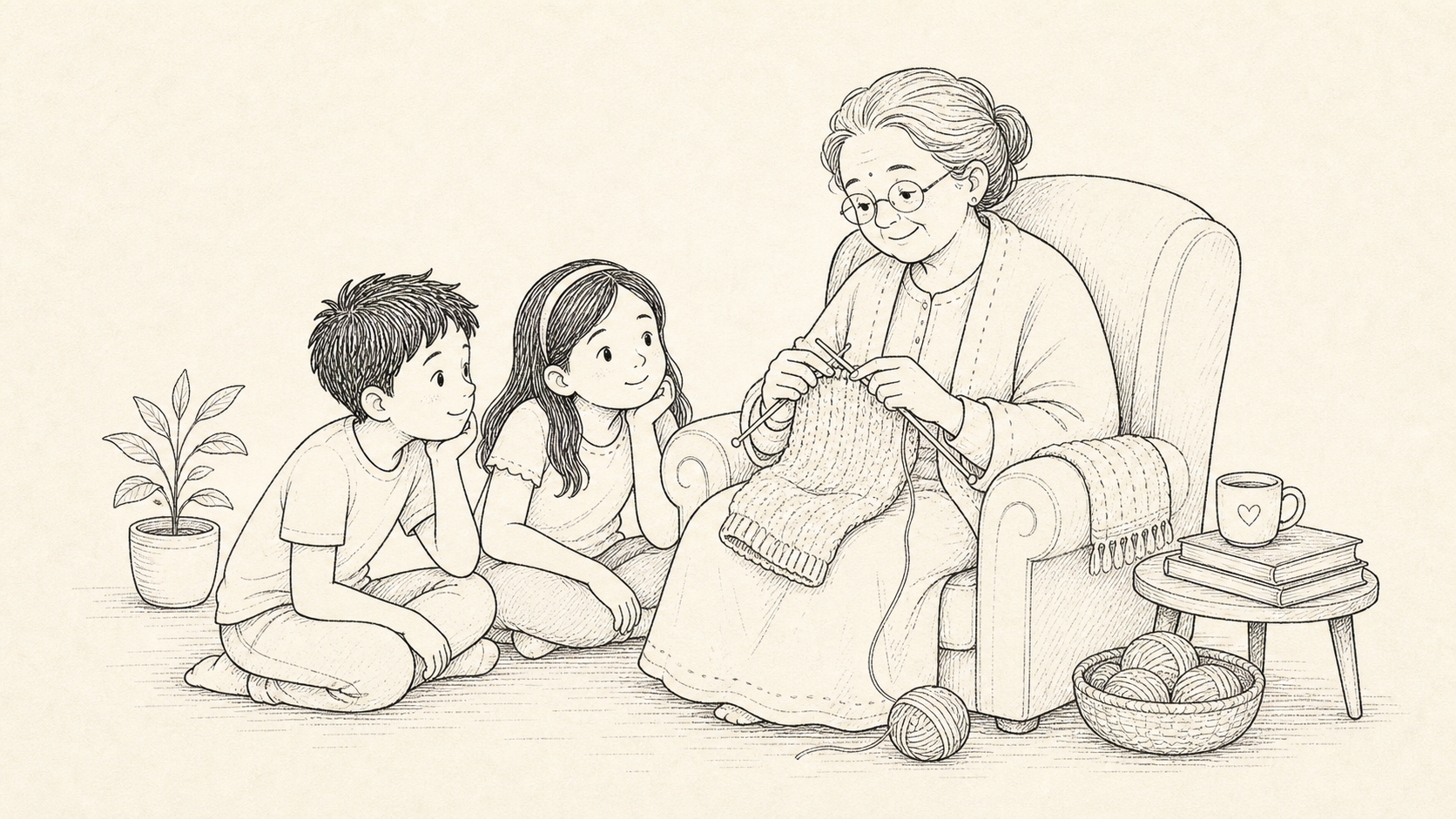
Here is the thing I have learned over the years about young children: they notice other people’s discomfort in a way that adults have mostly stopped doing. They see the grandmother struggling with a phone. They watch the shopkeeper count notes by applying saliva and wonder why.
What changes as kids move through school is the habit of paying attention to it. When every test in life expects you to provide the right answer written in a textbook, you learn to stop looking at the world for problems worth solving.
NEP 2020 names empathy as a core competency. India was the first country to introduce design thinking into school curricula for grades 7 to 12. The policy came into existence but has anything changed on the ground yet? Not much, because the teachers, schools, parents, the whole ecosystem is clueless about how to implement.
Some NGO or corporate doing design thinking workshops once in a while in select few schools won’t fix this. This needs consistent, well-directed practice of design thinking in a structured program.
In one of Lernok’s pilot sessions, we ran an empathy mapping exercise. 10-14 year old students were each asked to pick a problem they see daily in their life, but haven’t been able to fix. Then they had to actually talk to one person affected by the problem, observe them, and come back with notes.
We used ChatGPT as a copilot. Not to generate the insights but to help students prepare better interview questions beforehand, and to sort their raw notes into the empathy map quadrants afterward: what the person says, thinks, feels, and does. The AI was used to handle the structure but all the observations were by the students.
The insights were specific, personal, and grounded in real people. Not user personas. There was so much to learn for them from actual humans with actual habits and actual frustrations.
This is where I realised User Personas are great for adult designers, but not for young learners.
This specificity is only possible if you slow down and pay attention to someone other than yourself. No tools or AI can replace this part.
This matters more now than it did a decade ago, because building has become dramatically easier.
A kid in the Lernok cohort can prototype a working app in an afternoon. AI accelerates code, copy, and design. Execution is no longer the bottleneck, which means the question shifts from “can you build this?”, to:
“should this exist, and for whom?”
Taste is how you solve a problem well. Empathy is how you know which problem is worth solving.
Steve Jobs is often quoted to suggest that listening to users is overrated. What he actually meant is that users cannot describe a solution they’ve never seen. That’s different from saying you shouldn’t understand the problem they’re living with. Apple’s design process has always been rooted in deep understanding of what people find confusing, frustrating, or unnecessarily complicated. The taste comes after that understanding, not instead of it.
Problem-finding is not a personality type. It is a learnable skill with teachable components: the ability to observe before judging, to ask a follow-up question instead of jumping to an answer, to sit with someone else’s frustration rather than rushing toward a fix.
Understanding a problem deeply doesn’t guarantee the right solution. Timing, execution, and pricing all still matter. But without this foundation, you are building from assumptions rather than from reality. And when building is as cheap as it is now, that gap shows up faster.
The kind of builder I want a 12yo to become is not someone with great ideas. It’s someone who can base their hypothesis on real pepople’s needs and frustrations. Someone for whom the first question is always: who needs this, and why does it matter to them?
— Nehal